
Cat Anatomy: How Felines Regulate Body Temperature in Winter
When Winter Settles In, Your Cat Is Already Adjusting
Canadian winters ask a lot of our bodies, and our cats are no exception. While they may look like tiny, fluffy heat factories curled up on the back of the couch, your cat is constantly making subtle internal adjustments to stay warm, balanced, and safe.
Cats are masters of conservation. Every nap, stretch, tail tuck, and sunny window perch is part of a beautifully efficient system designed to regulate body temperature, especially when the cold settles in.
Understanding how feline anatomy works in winter doesn’t just satisfy our curiosity. It helps us recognize when a cat is comfortable, when they’re compensating, and when they might need a little extra support.
A Warm-Blooded Body Built for Efficiency
Cats are endothermic animals, meaning they generate their own body heat. A healthy cat’s normal body temperature ranges between 37.7–39.2°C, which is warmer than ours. Maintaining that temperature in winter requires a careful balance between heat production and heat retention.
Unlike humans, cats don’t rely heavily on shivering to stay warm. Instead, they prioritize energy conservation: sleeping more, moving less, and choosing warm areas throughout the home.
This is why winter often brings:
Longer naps
Reduced activity
A preference for enclosed or elevated spaces
It’s not laziness, it’s biology.
The Power of the Winter Coat (Even Indoors)
Your cat’s fur plays a significant role in temperature regulation. Even indoor-only cats experience subtle seasonal changes in their coat.
Feline fur works as insulation by trapping air close to the skin, creating a barrier between your cat’s body heat and the cold environment. The undercoat, those soft, dense hairs beneath the surface, is especially important for warmth.
You may notice:
A thicker or fluffier coat in fall and early winter
Increased shedding when the days begin to lengthen again
Regular brushing helps maintain this insulation by removing loose fur and preventing matting, which can actually reduce warmth by disrupting airflow.
Circulation: Keeping the Core Warm
One of the most fascinating aspects of feline anatomy is how cats manage blood flow in cold conditions.
In winter, a cat’s body prioritizes warmth for vital organs. Blood circulation to the core increases, while flow to extremities: ears, paws, and tail, is slightly reduced. This is why those areas often feel cooler to the touch.
It’s also why cats instinctively:
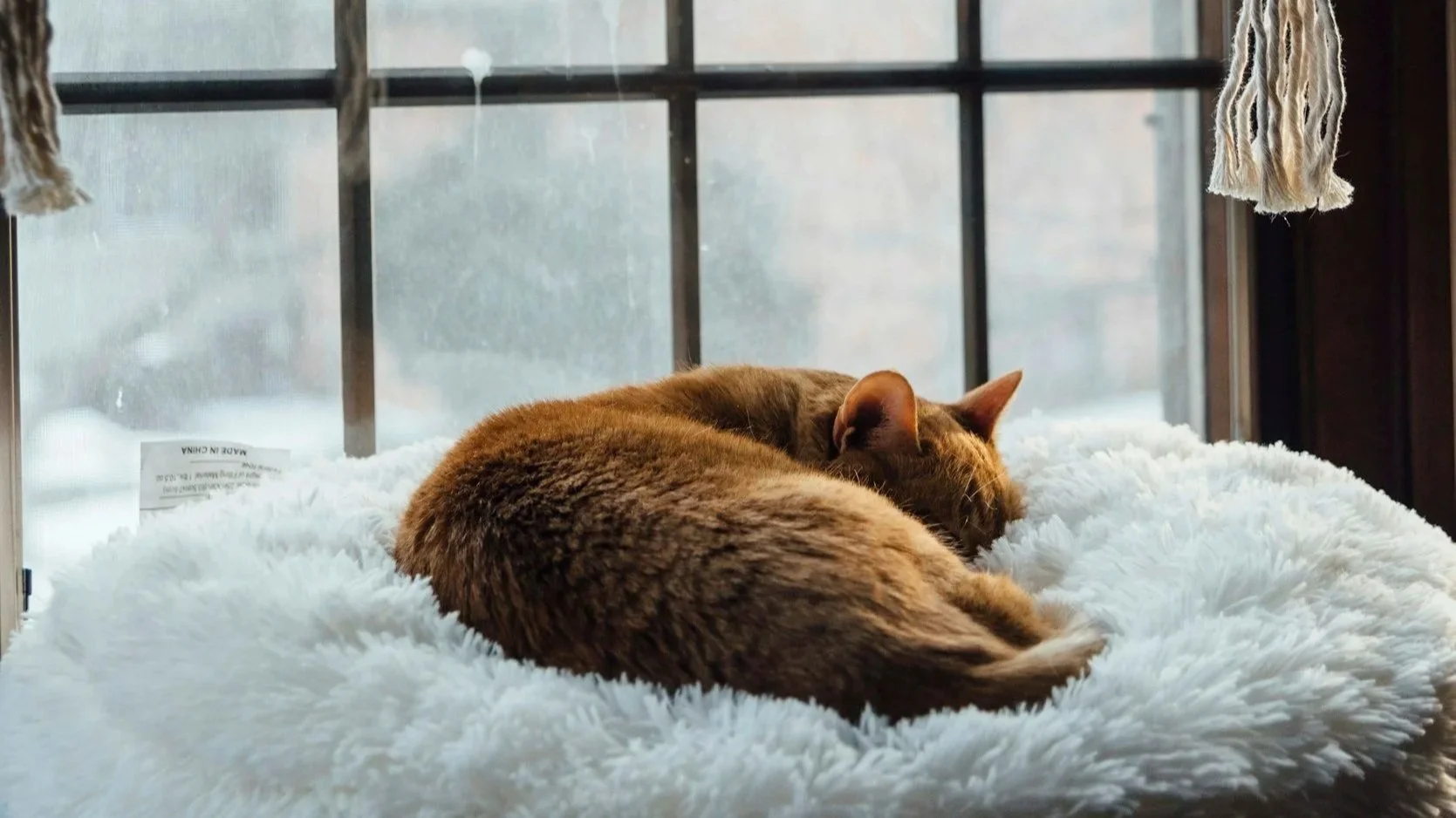
Curl into tight balls
Tuck paws beneath their body
Wrap their tail around themselves
These postures reduce heat loss and protect sensitive extremities from cold surfaces.
Behaviour Is Part of the Anatomy Too
A cat’s ability to regulate temperature isn’t just physical, it’s behavioural.
Cats seek out heat sources with remarkable precision. Sunbeams, radiators, heated floors, laptops, and freshly laundered blankets are all fair game. Elevated spaces also help, as warm air rises.
In winter, you might notice your cat:
Sleeping closer to you or other pets
Choosing smaller, enclosed sleeping spots
Avoiding cold floors or drafty rooms
These behaviours are instinctive and deeply tied to survival.
Providing warm, quiet resting places throughout your home allows your cat to self-regulate without stress.
Calories, Energy, and Staying Warm
Staying warm requires energy. In colder months, some cats naturally burn more calories simply maintaining body temperature, especially seniors, kittens, or cats with health conditions.
You may notice:
A slightly increased appetite
More interest in frequent, smaller meals
Weight changes in very active or outdoor-access cats
Any sudden change in appetite or weight should be discussed with your veterinarian, but subtle seasonal shifts are often normal.
Fresh water is also essential in winter. Cats can drink less when it’s cold, so ensuring easy access with multiple water bowl locations helps prevent dehydration.
Which Cats Need Extra Winter Support?
While most healthy adult cats regulate temperature well indoors, some need additional help:
Senior cats may have reduced circulation or arthritis that makes it harder to curl comfortably
Short-haired or hairless breeds lose heat more quickly
Cats with chronic illness may struggle to maintain body temperature
Recently grieving or stressed cats may seek more warmth and reassurance
For these cats, extra bedding, heated (cat-safe) pads, and predictable routines make a meaningful difference.
How You Can Support Your Cat This Winter
You don’t need to overhaul your home to help your cat stay warm. Small, thoughtful changes go a long way:
Place beds away from drafts
Offer multiple warm resting spots
Keep regular brushing part of your winter routine
Respect their need for extra rest
Maintain consistent feeding and care schedules
For cats who rely on professional care while you’re away, winter visits provide more than physical support; they offer comfort, stability, and connection.
A Season of Care, Inside and Out
Winter reminds us how much our cats trust us to notice the small things; the way they curl tighter, sleep longer, or seek closeness. Their bodies are always adapting, quietly working to stay balanced.
Supporting that process is one of the gentlest forms of love.
For cats who count on a familiar presence while you’re away, winter visits offer more than physical care; they offer comfort, continuity, and connection. Warmth isn’t just physical, it’s emotional too.
Call to Action
If you’re looking for professional cat care that understands feline behaviour, seasonal needs, and emotional well-being - or if you’re navigating the tender space of loving and missing a pet - I’m here. Visit Cat Sitting Visits and Pet Loss Grief Support to learn more.
💗 Paw and Soul offers professional cat care and compassionate grief support, rooted in respect, routine, and connection.
